

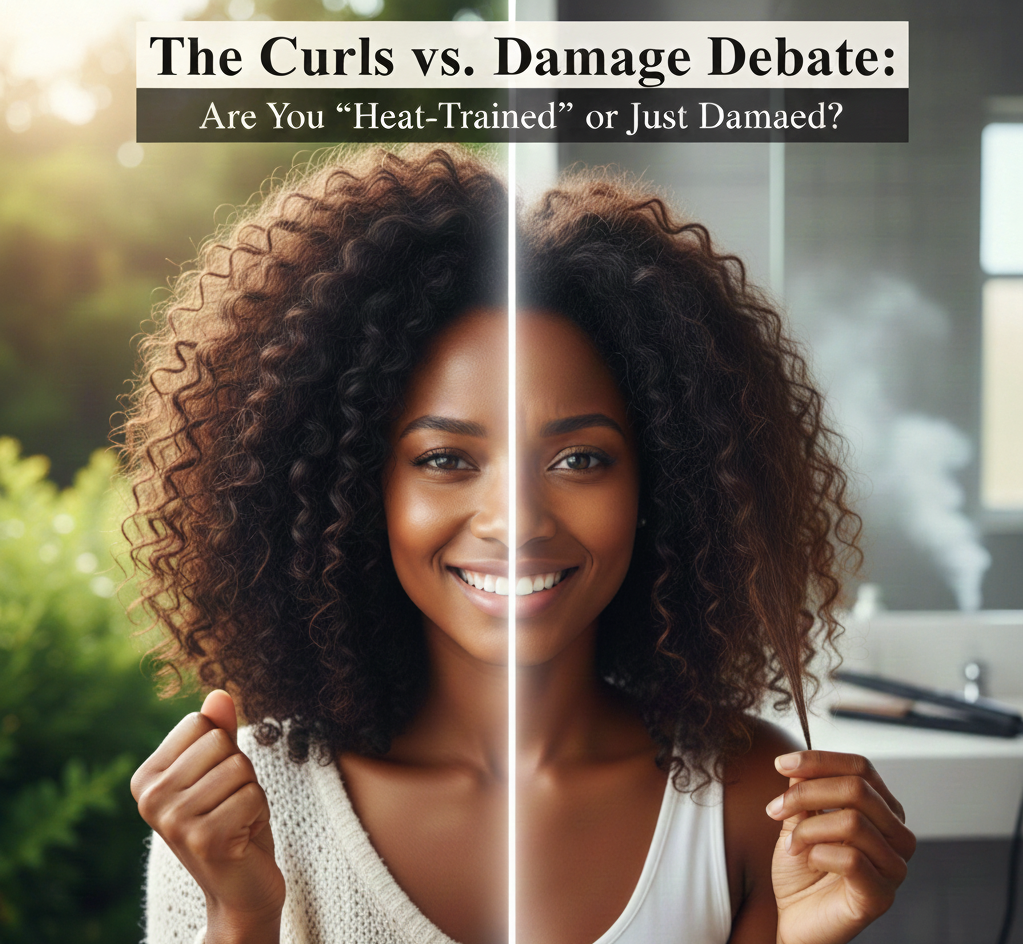
The Curls vs. Damage Debate: Are You "Heat-Trained" or Just Damaged?
Written by Julane Falknor
Hey, Crown Club Queens! Let's get real about a tricky subject that often leaves us confused, frustrated, and maybe a little ashamed: heat.
We’ve all been there—you want that sleek, bouncy blowout for a special event, or maybe you just crave the ease of straight hair for a week. You apply heat protectant, you move quickly, and you admire the shine. But then comes wash day. Your beautiful coils don’t snap back the way they used to. They look... limp.
Suddenly, you’re scrolling through forums asking: "Am I 'heat-trained,' or do I have permanent damage?"

This isn't just about frizz; it’s about the health of your crown and the confusing terminology that surrounds heat styling. In 2025, we are tackling this question head-on. We are going beyond the fear and arming ourselves with science and strategy to understand exactly what heat does to our hair and how to recover, or better yet, prevent the damage in the first place.
Ready to find out the truth about your curl pattern and your relationship with heat? Let’s dive in!
Defining the Terms – Where Confusion Lives
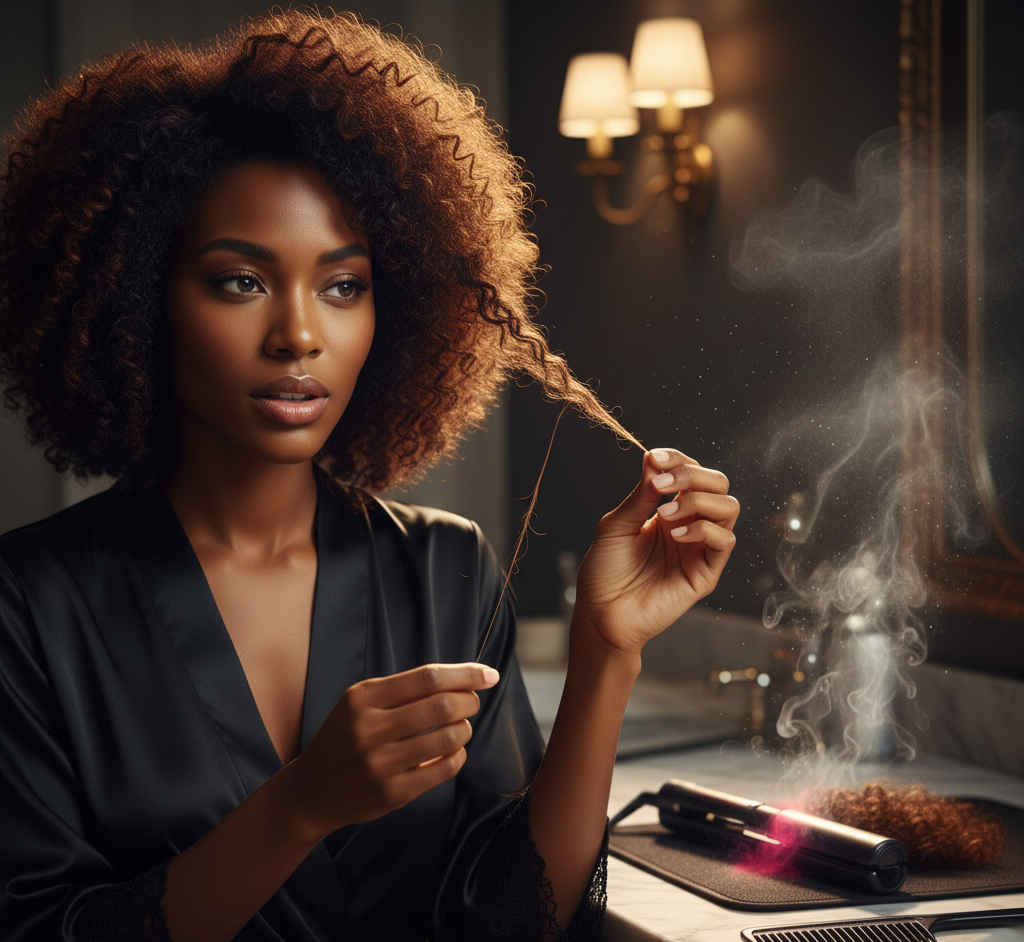
Before we can diagnose the issue, we need to clarify the language. The terms "heat-trained" and "heat damage" are often used interchangeably, but they mean very different things to your hair strand.
What is Heat Damage?
This is a structural change to your hair that is permanent. It happens when the heat applied is too intense (too high a temperature) or applied for too long (slow passes over the same section).
The Science: Heat damage affects the keratin structure deep inside the hair shaft. It breaks the disulfide bonds and hydrogen bonds that give your coils their unique spiral shape.
The Result: The cuticle is permanently raised and scarred, leading to loss of elasticity, chronic dryness, excessive frizz, and most notably, the inability of the hair to revert to its natural curl pattern when wet. This damage cannot be reversed; it can only be cut off.
What is Heat-Trained?
"Heat-trained" is a term often used in the natural hair community to describe a section of hair that has a looser curl pattern due to repeated, yet controlled, heat use.
The Problem with the Term: Most trichologists (hair scientists) would argue that "heat-trained" is a misnomer for mild, cumulative damage. While the change might be minor, it still indicates a structural alteration.
The Reality: Hair that is truly "heat-trained" usually has a partially loosened curl that might take slightly longer to revert after washing, but it will eventually revert to its natural state with intense moisturizing and time. The line between training and damage is extremely fine and easily crossed.
Curl Loosening vs. Permanent Straightening
It’s crucial to know the difference in the basin:
Loosening: Your hair is wet, and you still see some coiling, but it’s stretched out. This might revert with protein or deep conditioning.
Permanent Straightening: Your hair is wet, and the damaged section remains completely straight and limp—like a piece of string. This is damage, and it won't revert.
The Silent Saboteurs – How You Cross the Line
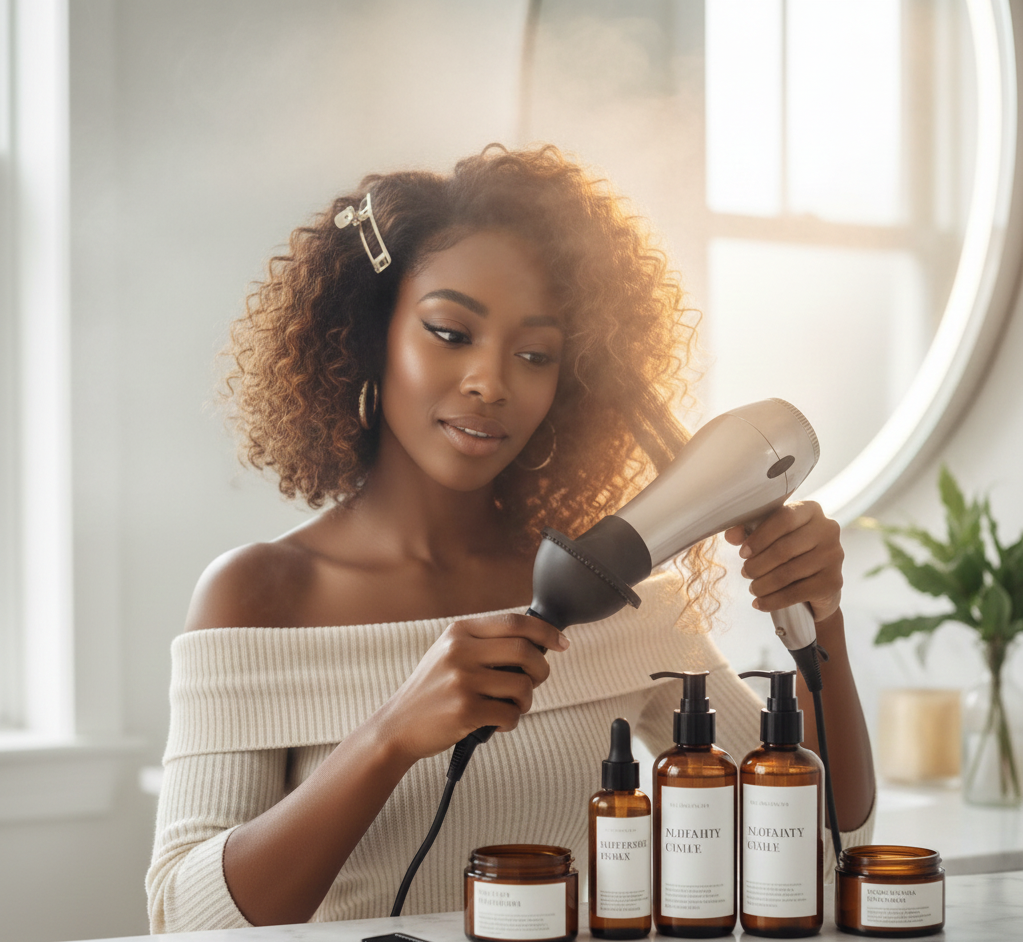
If you’ve experienced limp curls, you likely crossed the line from a temporary style to permanent damage without realizing it. Here are the three most common ways this happens:
The Temperature Trap (Too Hot!)
The biggest mistake Naturals make is using the same high heat settings as stylists use on fine, straight hair.
The Rule: Never exceed 400°F (204°C) on a flat iron, and try to keep it below 380°F (193°C). For tightly coiled or highly porous hair, 300°F to 350°F is much safer.
The Tool: Professional tools are designed to heat evenly. Cheap tools often have hot spots that can scorch a section of hair instantly. StyldLife Crown Club emphasizes investing in quality ceramics or titanium tools with precise digital temperature controls.
Slow Passes and Repeated Applications (Too Long!)
Damage isn't just about temperature; it’s about heat duration.
Slow Passes: Moving a flat iron very slowly over one section applies continuous, intense heat, literally cooking the keratin bonds. Use a quick, steady motion.

Multiple Passes: Ironing the same small section four or five times is equivalent to using extremely high heat. Aim for one or two passes maximum per section.
The Damp Hair Disaster (Moisture = Steam)
Applying heat to hair that is not 100% bone-dry creates steam inside the hair shaft.
Steam Damage: The sudden expansion of steam creates internal pressure, leading to bubble hair (tiny, permanent voids inside the hair strand), which causes it to become brittle and break easily.
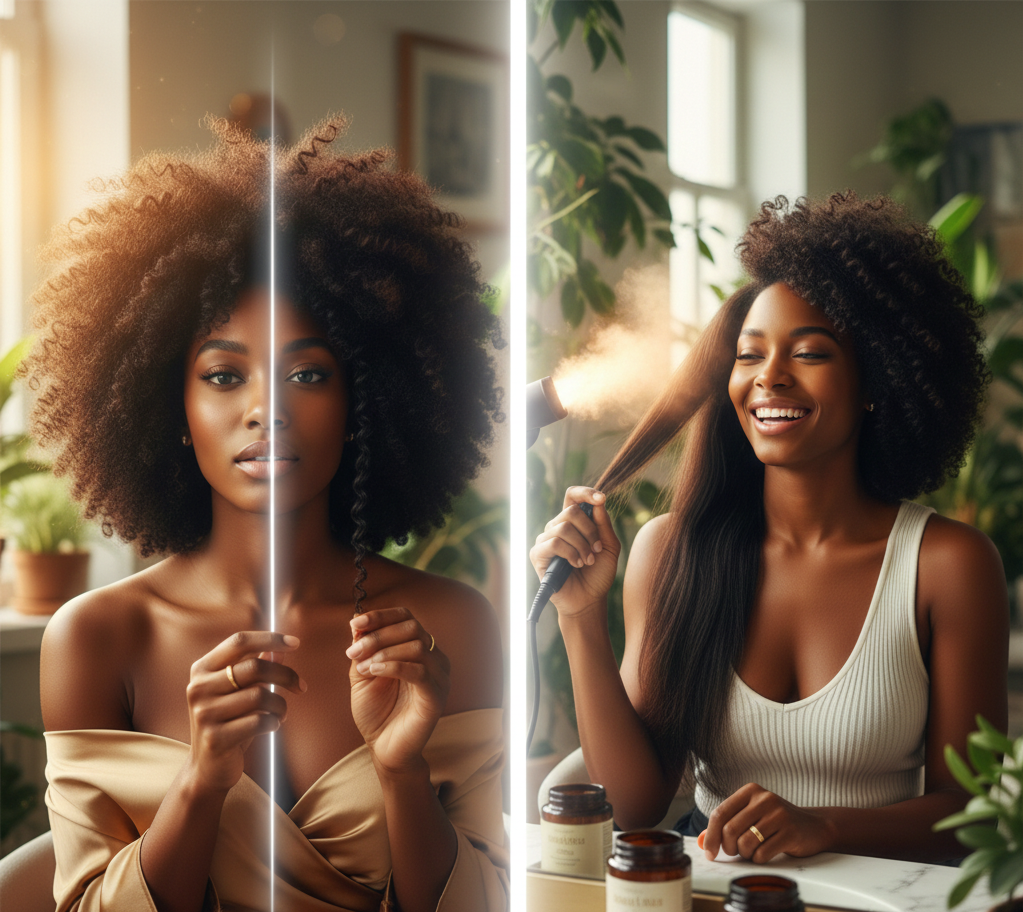
Your Blowout Strategy: If you plan to flat iron, your blowout must be perfect first. Your hair must be completely dry and stretched to minimize the need for slow, repeated flat iron passes.
The Recovery Plan – Can You Bring Them Back?
If you’ve spotted those limp strands, don't panic. You can attempt to rescue the hair, but you must be realistic about the extent of the damage.
The Water Test (Diagnosis)
Wash the affected section with clarifying shampoo and conditioner. Do not apply any styling product.
Observation: If the hair remains perfectly straight and limp when soaked, the damage is severe and structural. It needs to be trimmed.
Observation: If the hair shows some wave, kink, or coil, but less than the rest of your hair, the damage is mild to moderate. Proceed to Step 2.
Bond Repair Treatments
This is where science meets styling! The rise of bond-repair treatments is one of the biggest advancements in natural hair care in years.
How They Work: Products containing ingredients like Bis-Aminopropyl Diglycol Dimaleate (the active ingredient in Olaplex) or specific peptide technologies (like K18) work to repair and reconnect the broken disulfide bonds inside the hair shaft.

Crown Club Recommendation: Incorporating a bond-builder into your routine for 4–6 weeks can significantly improve elasticity and encourage your curl pattern to revert if the damage is only partial. Consistency is key here.
Protein and Deep Moisture Cycling
Mildly damaged hair often needs a balance of protein (to add structure) and deep moisture (to restore elasticity).
Protein Treatment: Use a light protein mask every 4–6 weeks to temporarily strengthen the hair and provide a framework for the curl to rebuild. Caution: Too much protein causes stiffness and breakage.
Deep Conditioning: Alternate protein treatments with intensive, heat-activated deep conditioners. Use a hooded dryer or a thermal cap to ensure the moisture penetrates the damaged, lifted cuticle.
The Strategic Dusting
If the damage is localized to the ends, a strategic dusting (a micro-trim) is essential. Waiting for split ends to heal is like waiting for a broken vase to magically repair itself—it won't happen. By trimming off the damaged ends, you stop the splits from traveling up the hair shaft and save the healthy length above it.
Healthy Heat – Achieving the Perfect Blowout Safely
You don't have to swear off heat forever, but you must approach it with meticulous care. If you choose to use heat, let it be a conscious, informed decision.
The Perfect Heat Protectant Cocktail
A heat protectant is the only shield you have against permanent damage, but not all protectants are created equal.
Ingredient Focus: Look for products that contain silicones (often demonized, but crucial for thermal protection) and natural oils with a high smoke point, like Grape Seed Oil or Avocado Oil.
Application: Apply your protectant before your stretching product, ensuring even saturation. We recommend a lightweight oil or serum that offers protection up to 450°F.
Mastering the Blowout for Flat Iron Prep
The best way to prevent flat iron damage is to do 90% of the straightening with the blow dryer.
The Cold Shot: Start and end your drying process with a shot of cool air. This helps seal the cuticle that the heat may have lifted.
Tension Method: Use a round brush or a tension method (pulling the hair straight with your hand while drying) to achieve maximum stretch and dryness. The straighter your hair is after the blow dryer, the faster you can pass the flat iron.
The One-Time Rule
If you are going to use heat, commit to one heat session between washes. Do not apply heat again mid-week to refresh or smooth a frizzy spot. Re-applying heat to dry, unprotected hair is the fastest route to damage.
Style Longevity: Use a Curl Defining Custard during the prep phase, even for straight styles, as its sealing properties help repel humidity and keep the style smooth for longer.

Embracing Texture – Why The Natural State Always Wins
The biggest hurdle for many is accepting the inevitable truth: our natural curl pattern is always going to be our most beautiful and healthiest state. Chasing a permanently looser, straighter pattern is chasing damage.
The Crown Club Confidence Boost
The mission of StyldLife Crown Club is to celebrate every kink, coil, and curl. We want to empower you to see that your unique texture is what sets you apart.
Your Hair, Your Identity: The natural hair movement is about freedom—freedom from chemical relaxers, freedom from unrealistic beauty standards, and freedom from hours of daily manipulation. Embrace the volume, the shrinkage, and the strength of your God-given pattern!

Community Support: If you're struggling to love your hair or resist the urge to straighten it constantly, lean into our Crown Club Community Forum. Share your "limp strand" pictures! We are here to offer judgment-free support, product suggestions, and tutorials that celebrate your texture, not modify it.
Final Verdict: Training is Temporary, Damage is Permanent
Remember this simple truth: Heat-trained is just a temporary style; permanent damage is a permanent change.
Use heat judiciously, invest in quality tools, and always prioritize the health of your keratin bonds. Your healthiest hair is your natural hair. Let's work together to celebrate the power and beauty of a fully reverted, thriving crown!
What's your biggest struggle with heat styling? Have you successfully reverted your curls after damage? Share your tips and experiences in the comments below!